Quantum 800 Wireless Honest Review — Is the Hype Justified?
I've been using the Quantum 800 Wireless headset for the past four months across work, music, and gaming sessions. I bought it because the marketing promised a blend of strong wireless performance, a clear microphone, and a comfortable fit for long sessions. In this review I’ll walk through my real-world experience — what stood out, what disappointed me, and whether the hype is justified for different types of users.
First impressions and build quality
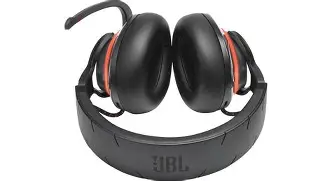
Out of the box, the Quantum 800 Wireless feels like a solid mid-to-upper-tier headset. The headband is metal-reinforced, but the outer finish is a matte plastic that resists fingerprints. I noticed immediately that the ear cups are generously padded with memory-foam-like material and covered in a soft faux-leather. In my experience the padding is comfortable at first, although it does warm up on longer sessions and can become slightly sweaty in a warm room.
The controls are mostly on the right earcup: a volume wheel, a power/button, and a multifunction button for pairing/voice assistant. There’s also a flip-to-mute microphone arm which mechanically mutes and has a satisfying click. The USB-C charging port and a small status LED are tucked under the cup. Overall build quality feels durable for regular daily use, but the hinge mechanism is simple and not overly reinforced, so I wouldn't treat it like a travel-friendly folding model.
Comfort and fit — my long-session experience
Comfort is one area where the Quantum 800 Wireless has generally held up well. I wore them for 2–4 hour blocks regularly while working and gaming. The clamping force is moderate — secure enough that they don’t wobble when I move around, but not so tight that my temples hurt after an hour. The memory-foam cups are plush and distribute pressure evenly, though after long sessions I did notice some heat buildup and mild ear fatigue. If you do marathon sessions (6+ hours), consider switching to lighter cloth-eared alternatives or taking short breaks every couple hours.
Connectivity and wireless performance
I tested the headset on a laptop, a desktop with a USB wireless dongle, and my phone via Bluetooth. The Quantum 800 Wireless claims multi-mode wireless: a low-latency 2.4 GHz dongle for desktop/console use and standard Bluetooth for mobile. In my experience this worked as advertised.
- With the 2.4 GHz dongle, pairing was effortless and the connection was rock solid at typical desk distances (up to 10 meters with clear line of sight). I experienced almost no dropouts and very low latency in games — only a faint sense of delay in the most rhythm-critical moments.
- Bluetooth performance was stable for music and calls. Switching between the dongle and Bluetooth required a manual mode change, which is fine, but I missed automatic multipoint switching when using multiple devices simultaneously.
One thing I noticed: in crowded Wi-Fi environments with many 2.4 GHz signals, I occasionally heard minor interference artifacts — short, subtle crackles — during intense audio scenes. It wasn't common, but it did happen in my apartment during peak network usage.
Sound quality and signature
Sound is the core reason most people buy a headset. After weeks of listening to a variety of material — orchestral tracks, hip-hop, acoustic folk, and in-game soundscapes — here’s my take:
- Bass: The Quantum 800 Wireless delivers a firm, present low end. Bass is punchy and satisfying for games and electronic music. I appreciated the weight it adds to explosions and bass drops. That said, it can feel a touch overemphasized with certain tracks, muddying complex low-mid textures at higher volumes.
- Mids: Vocals and midrange instruments are generally clear, though the mid-bass bump sometimes masks delicate details. I could hear vocals well in most mixes, which made the headset perfectly usable for streaming and podcasting.
- Highs: Treble is smooth and not overly bright. That means less fatigue for long listening sessions, but slightly less sparkle and air compared to open-back or studio-grade cans.
- Soundstage: The perceived space is decent for a closed-back wireless headset. For competitive FPS, positional cues are reliable enough to identify footsteps and direction, but the soundstage isn’t as wide or deep as higher-end dedicated gaming headsets or open-back audiophile models.
Overall the signature is tuned for immersion and impact rather than analytical listening. In my experience it's a comfortable, enjoyable sound for gaming and casual music listening, but if you're chasing studio-accurate neutrality, this isn’t the headset for you.
Microphone performance
The flip-to-mute boom mic is one of the stronger practical features. In daily calls and multiplayer gaming sessions, the mic presented my voice clearly and with natural warmth. Background rejection is decent; typical room noise (keyboard, fan hum) was attenuated enough, and teammates reported that my voice sounded full and not thin.
However, when I tested the microphone in a noisier environment (near a running dishwasher and with children in the next room), it began to pick up more ambient noise than I expected. It handles moderate noise well, but it's not a studio-grade mic with advanced noise-canceling hardware. If you need broadcast-level silence or heavy noise suppression, plan to use a dedicated desktop mic.
Find top-rated Audio & Headphones products at great prices.
Shop Amazon →Battery life and charging
Battery life is consistently one of the most practical aspects of any wireless headset. In my usage — a mix of music playback and gaming via the dongle — I averaged about 30–35 hours between charges at moderate volumes. That matched my expectations for a modern wireless headset and meant I only charged once a week with regular use.
Charging via USB-C is convenient. A full charge took roughly 2 hours from near-empty. The headset also has a quick-charge feature that gives a few hours of use from a short 15-minute charge, which I found useful before unexpectedly long calls.
Software and customization
The companion app offers EQ presets, a five-band graphic EQ, and a few toggles for surround virtualization and microphone settings. I used the app to dial down the low-mid bump and apply a slight treble lift, which made a noticeable difference. The app's interface is functional but not flashy. Firmware updates arrived a few times during my ownership and were straightforward to apply.
One annoyance: settings are stored on the headset but some advanced features (like per-application profiles) require the app to be running. If you switch computers often, you may need to reconfigure or keep the app installed on each machine.
Durability and daily use notes
After four months of daily use, the headset shows minimal wear. The faux-leather shows very light creasing on the ear cups but no flaking yet. The headband padding has remained comfortable. The only small cosmetic complaint is that the matte plastic picks up micro-scratches from being tossed in a bag without a case. There wasn’t any functional degradation.
Pros & Cons
- Pros
- Comfortable for multi-hour sessions with plush ear padding
- Strong, punchy bass that enhances games and modern music
- Reliable 2.4 GHz wireless mode with low latency for gaming
- Long battery life (roughly 30–35 hours in my testing)
- Clear, serviceable flip-to-mute boom mic for calls and gaming
- USB-C charging and useful quick-charge capability
- Cons
- Sound signature leans bass-heavy; not ideal for critical listening
- Can get warm during very long sessions; faux-leather traps heat
- No true multipoint auto-switching; manual mode switching required
- Minor interference artifacts in crowded 2.4 GHz environments
- App-dependent advanced features; per-device configuration is tedious
How it compares (quick table)
| Feature | Quantum 800 Wireless (my unit) | Typical Midrange Wireless | High-end Audiophile Headset |
|---|---|---|---|
| Battery life | ~30–35 hours (my tests) | 20–30 hours | 30–50 hours |
| Wireless modes | 2.4 GHz dongle + Bluetooth | Bluetooth only / optional dongle | 2.4 GHz + Bluetooth with better multipoint |
| Sound signature | Bass-forward, immersive | Balanced, consumer-friendly | Neutral/analytical or custom-tuned high fidelity |
| Microphone clarity | Good for calls and gaming | Average | Studio-grade (with external mics) |
| Comfort (long sessions) | Good, can warm up | Varies | Usually excellent with breathable materials |
| Best use case | Gaming + casual music | Everyday use, commuting | Critical listening, professional work |
Who should consider the Quantum 800 Wireless?
In my experience the Quantum 800 Wireless fits a specific sweet spot. Consider this headset if:
- You prioritize gaming immersion with low-latency 2.4 GHz wireless and strong bass.
- You want a long battery life that doesn't require daily charging.
- You want a microphone that’s good enough for streamers or frequent team chat without buying a separate mic.
- You value comfort for several-hour sessions and a solid, durable build without spending into premium audiophile territory.
It’s less suitable if you need neutral, studio-accurate sound, advanced multipoint switching across many devices, or the coolest lightweight travel headset with fold-flat hinges.
Buying guide — what to check before you buy
If you’re deciding whether the Quantum 800 Wireless is right for you, ask yourself the following and test for them if possible:
1. What will you use it for most?
If most of your time is gaming and casual music, the headset's emphasis on impact and bass will be an advantage. If you do professional audio editing or prefer an analytical sound, look for a neutral signature or an open-back design.
2. Do you need low-latency wireless?
Are you playing competitive FPS or rhythm games that demand split-second audio feedback? The 2.4 GHz dongle mode performs much better for latency-sensitive use than Bluetooth. Verify the vendor's low-latency claims and test with a dongle if possible.
Discover deals on Audio & Headphones — updated daily.
View Offers →3. How important is microphone quality?
Check sample recordings in real-world conditions (voice calls, noisy backgrounds). The Quantum 800 Wireless has a very usable mic for chat and streaming, but it isn't a replacement for a dedicated desktop microphone in demanding setups.
4. Comfort and materials
Consider how long your sessions typically are. If you run marathons, test for ear heat and clamp pressure. Look for breathable cup materials if you’re in a hotter climate.
5. Software features and ecosystem
Do you rely on companion apps for EQ, surround virtualization, or profiles? If so, check whether the app supports your OS and how settings are stored. I found that the app was useful but occasionally required reconfiguration across devices.
6. Interference and environment
If you live in an apartment with many Wi‑Fi networks, ask about the headset’s performance in crowded 2.4 GHz bands. In my experience, interference was rare but possible under heavy network congestion.
Final thoughts — is the hype justified?
After four months of daily use, I think the Quantum 800 Wireless earns most of the positive attention it gets, with some caveats. What I found was a comfortable, durable headset that delivers immersive sound, long battery life, and a reliable microphone — all very useful for gaming and general daily use. The low-latency dongle mode makes it noticeably better in games than Bluetooth-only headsets, and the quick-charge feature saved me more than once.
That said, the hype can overpromise: the sound signature is not neutral, the absence of seamless multipoint switching can be inconvenient for multi-device users, and interference in dense 2.4 GHz environments can surface. In my experience, those are trade-offs rather than deal-breakers for the right buyer.
If you want a robust gaming-focused wireless headset with strong battery life and a good mic for a reasonable price, the Quantum 800 Wireless is worth considering. If your top priorities are studio-accurate sound, the lightest travel profile, or flawless multipoint device switching, you may want to compare a few other models before committing.
Conclusion
In short: I was pleasantly surprised by how well-rounded the Quantum 800 Wireless turned out to be in daily life. It isn't perfect, but after several months of use it has become my go-to for long workdays and evening gaming sessions because of its comfort, battery life, and dependable wireless performance. The hype is largely justified for gamers and general users who value immersion and practicality; audiophile purists and heavy multi-device switchers may find better fits elsewhere.