5 Hidden Features of the Deathadder Elite You Must Know About
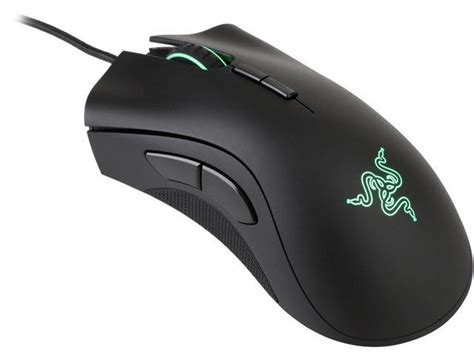
In the high-stakes world of competitive gaming and professional ergonomics, few peripherals carry as much weight as the Razer DeathAdder Elite. While its iconic silhouette is recognizable from across a convention floor, the "Elite" iteration of this legendary mouse was a turning point for Razer, moving beyond simple aesthetics to incorporate engineering marvels that many users never fully utilize. It is often cited as the gold standard for right-handed ergonomic mice, yet many owners treat it as a simple plug-and-play device without ever scratching the surface of its deeper capabilities. This article explores the nuanced technicalities and hidden functionalities that transform this piece of hardware from a standard input device into a precision instrument for high-tier performance.
The DeathAdder Elite was designed during a period when sensor technology and mechanical switch endurance were the primary battlegrounds for manufacturers. While newer models have since entered the market, the Elite remains a staple on the desks of enthusiasts because of its specific mechanical and firmware-level features. Understanding these hidden features is essential for anyone looking to maximize their productivity or competitive edge, as they relate to everything from lift-off distance calibration to the physical architecture of the mouse's internal switches.
Detailed Product Analysis: The Engineering of an Icon
At the heart of the DeathAdder Elite is the PMW3389 sensor, a customized optical engine developed in collaboration with PixArt. While the marketing materials often tout the 16,000 DPI (dots per inch) ceiling, the true value lies in its resolution accuracy. Most sensors lose tracking integrity as DPI increases, but the Elite maintains a 99.4% resolution accuracy rating. This means that even at high speeds—up to 450 inches per second—the mouse does not suffer from jitter or artificial acceleration. For a buyer, this translates to muscle memory consistency; the distance moved on the pad always corresponds exactly to the distance moved on the screen.
The build quality also hides several design choices that favor long-term durability over flashy gimmicks. The side grips, for example, are not merely glued-on rubber pads but are textured with a multi-directional hex pattern designed to wick away moisture. This reflects a deep understanding of the real-world use case: intense, multi-hour gaming sessions where palm sweat usually leads to a loss of control. Furthermore, the inclusion of tactile ridges on the scroll wheel provides a level of feedback that prevents accidental over-scrolling, a feature crucial for weapon switching in tactical shooters or precise timeline scrubbing in video editing software.
1. Advanced Surface Calibration and Lift-Off Tuning
One of the most frequently overlooked features of the DeathAdder Elite is its ability to perform manual surface calibration. Within the software ecosystem, users can access a dedicated calibration tab that allows the sensor to "learn" the specific texture, color, and reflectivity of the mouse pad being used. This goes beyond standard presets; it enables the user to manually set the lift-off distance (LOD). For gamers who play at low sensitivities and frequently reset their mouse position by lifting it off the surface, a high LOD can cause "cursor drift" during the lift and landing. By tuning this hidden setting, users can effectively cut the LOD down to under 1mm, ensuring the cursor remains perfectly still the moment the mouse leaves the pad.
2. The Omron Mechanical Switch Architecture
While most users know the clicks feel "crisp," few realize the DeathAdder Elite features co-designed Razer/Omron switches that are physically different from standard mechanical switches. These are rated for 50 million clicks, but their secret lies in the gold-plated contact points. These contacts are designed to prevent the "double-clicking" issue that plagues many lower-quality mice. The physical lever inside the mouse is also tuned for a specific actuation force that minimizes the delay between the intent to click and the electrical signal being sent to the computer. This "hidden" mechanical advantage is what makes the mouse feel more responsive than its competitors, even if the polling rate is set to the same 1000Hz frequency.
Shop the latest Electronics picks on Amazon.
See Deals →3. On-the-Fly Sensitivity Stages with Visual Cues
The DeathAdder Elite features two dedicated buttons behind the scroll wheel for DPI adjustment. What many don't realize is that these stages are fully customizable and can be tied to specific lighting profiles. Instead of cycling through five generic settings, a user can program a "sniper" stage or a "fast-turn" stage. More importantly, the mouse can be configured to provide a visual cue through the scroll wheel LED to indicate which stage is active. This is particularly useful in productivity workflows where a graphic designer might need a very low DPI for pixel-perfect masking but wants to flick back to a high DPI for navigating a 4K monitor setup instantly without looking at a software overlay.
4. Hybrid Internal Storage and Cloud Profiles
A persistent concern for professionals who travel or move between workstations is losing their settings. The DeathAdder Elite utilizes a hybrid system where it can store specific configuration data locally while syncing more complex macros to the cloud. This means that even if you plug the mouse into a machine without the native software installed, the core DPI stages and polling rate stay consistent. This "set it and forget it" capability is hidden within the profile management settings and is a lifesaver for tournament players or office workers who switch between a laptop and a desktop regularly.
5. Intelligent Inter-device Communication
If you use other peripherals within the same ecosystem, the DeathAdder Elite unlocks a hidden feature known as "inter-device communication." For example, you can program a key on your keyboard to act as a "clutch" for the mouse. When held down, this key can temporarily lower the mouse's DPI or change its lighting color. This synergy allows for a level of control that a standalone mouse cannot provide. It essentially turns your entire desk setup into a single, cohesive interface where the mouse's behavior is dynamically altered by your other inputs.
Pros and Cons
- Pro: Top-Tier Sensor Accuracy. The customized PixArt sensor remains one of the most reliable optical engines ever produced, offering zero hardware acceleration and minimal jitter.
- Pro: Timeless Ergonomics. The right-handed flare and high-arch design support palm and claw grips exceptionally well, reducing carpal strain during long sessions.
- Pro: Tactile Feedback. Both the main buttons and the scroll wheel offer distinct, satisfying mechanical feedback that confirms every input without being overly loud.
- Pro: Extensive Customization. From the RGB nuances to the lift-off distance, the level of granular control over the hardware is among the best in the industry.
- Con: Fixed Weight. Unlike some modern competitors, the Elite does not offer a weight-tuning system, which may be a drawback for users who prefer an ultra-light or very heavy mouse.
- Con: Right-Hand Exclusive. The aggressive ergonomic slant makes it entirely unusable for left-handed users, limiting its market reach.
- Con: Software Dependency. To access many of the advanced features like surface calibration, the user must install a relatively large software suite.
Comparison: DeathAdder Elite vs. Competitors
When evaluating the DeathAdder Elite, it is helpful to see how it stacks up against other legendary peripherals in the same class. This comparison focuses on the core technical specs that impact daily use and longevity.
| Feature | Razer DeathAdder Elite | Standard Optical Mouse | High-End Wireless Alternative |
|---|---|---|---|
| Max DPI | 16,000 | 1,000 - 3,200 | 20,000+ |
| Sensor Type | Custom Optical (PMW3389) | Generic Laser/Optical | High-Efficiency Optical |
| Switch Lifecycle | 50 Million Clicks | 5 - 10 Million Clicks | 70 Million+ (Optical) |
| Tracking Speed | 450 IPS | 60 - 150 IPS | 400 - 650 IPS |
| Weight | 96g - 105g | Varies (usually 110g+) | 60g - 80g |
| Connectivity | Braided USB Cable | Standard PVC Cable | Wireless / USB-C |
Buying Guide: Is the DeathAdder Elite Right for You?
Choosing a mouse is a highly subjective process, but there are objective criteria you should use when considering the DeathAdder Elite. The first and most important factor is hand size and grip style. This mouse is categorized as a large-sized peripheral. If your hands are smaller than 17cm from the base of the palm to the tip of the middle finger, you may find the arch too aggressive. However, for those with medium to large hands, the ergonomic curve is designed to encourage a "natural" hand position, which keeps the wrist straight and prevents the ulnar deviation that leads to fatigue.
The second factor is use case variety. While marketed for gaming, the DeathAdder Elite is an exceptional productivity tool. If you are a coder, a writer, or a data analyst, the high-quality sensor means you are making fewer micro-corrections with your hand to hit small buttons or line items on a screen. This significantly reduces the physical workload on your forearm muscles over the course of an eight-hour workday. If you value a "dead-on" feel where the cursor moves exactly where your brain expects it to, this mouse is a top contender.
Discover deals on Electronics — updated daily.
See Deals →Lastly, consider environment and setup. The DeathAdder Elite uses a braided "Speedflex" style cable which is designed to minimize drag. However, if you have a very cluttered desk, you might still experience cable snag. Users who prioritize a completely clean aesthetic might look toward wireless versions, but if you want the absolute lowest latency and don't want to worry about charging batteries, the wired Elite provides a level of reliability that wireless technology still struggles to match in terms of consistency over years of service.
Key Considerations Summary:
- Determine your grip style: Best for Palm or relaxed Claw.
- Assess your desk space: The mouse requires a decent amount of room to take advantage of its low-DPI tracking capabilities.
- Check your software preference: Are you comfortable using a centralized software hub to manage your hardware settings?
- Think about longevity: The braided cable and mechanical switches are built for users who don't want to replace their mouse every 12 months.
The Practical Impact of High Tracking Speed
One "hidden" aspect that buyers often ignore is the 450 IPS (Inches Per Second) rating. To put this in perspective, a human arm moving at top speed during a "flick" rarely exceeds 200-250 IPS. Having a ceiling of 450 means there is a massive amount of "overhead." For the user, this means that no matter how fast you move your hand—perhaps to catch a rogue window closing or to react to a fast-moving element in a game—the sensor will never "spin out." Spinning out is when a mouse sensor loses its place because it can't process the movement fast enough, resulting in the cursor flying to the top or bottom of the screen. The DeathAdder Elite's high-speed tracking ensures that your most frantic movements are still translated with 1:1 precision.
Furthermore, the sensor's ability to handle high G-forces (acceleration) up to 50G is equally important. This isn't about moving the mouse consistently fast, but about how quickly you can start or stop a movement. This instantaneous response is what creates the "snappy" feeling users often describe. It makes the computer feel faster and more responsive, which in turn makes the user more efficient. In creative applications like Photoshop, this allows for much more fluid brush strokes that feel like they are coming from a physical pen rather than a clunky plastic device.
Conclusion
The Razer DeathAdder Elite is more than just a ubiquitous gaming peripheral; it is a meticulously engineered tool that hides its best features beneath a familiar surface. From the granular control of lift-off distance to the physical resilience of its custom mechanical switches, it offers a level of technical depth that few other mice in its price bracket can match. By taking the time to calibrate the surface tracking and customize the DPI stages, users can unlock a personalized experience that feels like an extension of their own arm. Whether you are navigating complex spreadsheets or competing in a high-stakes digital environment, the Elite provides the consistency, durability, and ergonomic support necessary for peak performance. Its status as a legend is not just due to marketing, but to these very features that ensure every click and every movement is captured with surgical precision.